
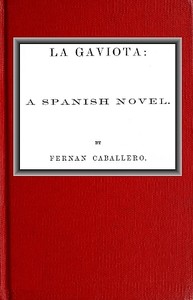
La Gaviota: A Spanish novel by Fernán Caballero
Let's talk about a book that feels like a secret from another time. 'La Gaviota' was a huge hit when it came out in 1849, and it's often called the first modern Spanish novel. But don't let that scare you off. At its heart, it's a story about a girl with an incredible voice and the choices that voice leads her to make.
The Story
We meet Marisalada, nicknamed 'The Seagull,' in a small Andalusian fishing village. She's wild, unpolished, and sings with a raw, natural talent that stuns everyone who hears her. A German doctor, Stein, visiting the village, is captivated. He sees her potential and, along with a wealthy duke, decides to 'civilize' her. They take her to Seville and then to Madrid, where she's trained as an opera singer.
Marisalada becomes a sensation. She marries a nobleman, lives in luxury, and is the toast of the town. But the higher she climbs, the further she gets from the simple, honest person she was. The village boy who truly loved her, the doctor who believed in her talent—they all watch as the fame changes her. The book asks: can you become a great artist without leaving your old self behind?
Why You Should Read It
What grabbed me was how current Marisalada's dilemma feels. It's the classic 'selling out' story, but set in a world of carriages and corsets. Fernán Caballero (the pen name for Cecilia Böhl de Faber) writes with such warmth and detail about Spanish life—the village festivals, the city gossip, the landscapes. You can almost smell the sea air and hear the guitars.
But she's also not afraid to be critical. The book pokes fun at the snobbery of high society and questions whether 'progress' and 'refinement' are always good things. Marisalada isn't just a victim; she's ambitious and makes her own flawed choices. You'll root for her, get frustrated with her, and maybe see a little bit of that conflict in yourself.
Final Verdict
This is perfect for anyone who loves historical fiction with a strong, prickly female lead. If you enjoyed books like 'Madame Bovary' for their social commentary or 'Jane Eyre' for their focus on a woman's place in the world, you'll find a fascinating Spanish cousin here. It's also a great pick for travelers who want to feel the soul of 19th-century Spain. Just be ready—it’s not a fairy tale. It's a thoughtful, sometimes bittersweet look at the cost of chasing a dream.
You are viewing a work that belongs to the global public domain. Distribute this work to help spread literacy.
William Wilson
1 year agoThe layout of the digital version made it easy to start immediately, the author manages to bridge the gap between theory and practice effectively. Simple, effective, and authoritative – what else could you ask for?
Jessica Jones
2 months agoBefore I started my latest project, I read this and the concise summaries at the end of each section are a lifesaver. This adds significant depth to my understanding of the field.
John Anderson
4 months agoThe citations provided are a goldmine for further academic study.
John Harris
1 year agoI was skeptical about the depth of this book at first, but the concise summaries at the end of each section are a lifesaver. I feel much more confident in my knowledge after finishing this.







Richard Martin
6 months agoInitially, I was looking for a specific answer, but the footnotes provide extra depth for those who want to dig deeper. Truly a masterpiece of digital educational material.