
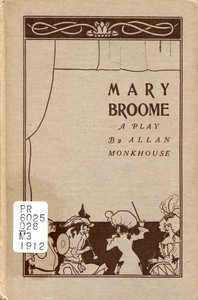
Mary Broome: A Comedy, in Four Acts by Allan Monkhouse
First published in 1911, Allan Monkhouse's Mary Broome is a play that feels like it could have been written yesterday. It’s set in a comfortable, middle-class English home, where everyone knows their place—until they don’t.
The Story
The plot kicks off with a classic problem: Leonard, the aimless and artistic son of the Timbrell family, has gotten their housemaid, Mary, pregnant. His strait-laced father, Mr. Timbrell, is horrified, but sees only one 'honorable' solution: Leonard must marry Mary immediately. What follows is a brilliant, awkward, and often hilarious clash of worlds. Leonard, who sees himself as a free spirit, is forced into responsibility. Mary, practical and clear-eyed, is thrust into a family that doesn't want her. The play follows their disastrous attempt at marriage, watching as Leonard's romantic ideals crash into reality and Mary's quiet strength becomes the only solid thing in the mess. It's less about the scandal itself and more about the painful, funny fallout.
Why You Should Read It
I loved this play because it refuses to give easy answers. Monkhouse doesn't paint Mary as a pure victim or Leonard as a total villain. They're both trapped, just in different ways. Mary’s calm, almost detached practicality is fascinating—she sees the hypocrisy of her 'betters' more clearly than they see themselves. The real tension comes from watching the Timbrell family try to maintain their decorum while their entire social order is challenged from within. The dialogue is witty and sharp, full of those polite insults that cut the deepest. It made me think about how much has changed in how we view class and marriage, and how much hasn't.
Final Verdict
This is a perfect pick for anyone who enjoys character-driven stories or classic plays that aren't by Shakespeare. It's for readers who like their comedy with a strong dose of social observation—fans of Oscar Wilde or George Bernard Shaw would feel right at home. It’s also a great, accessible entry into Edwardian drama. You can read it in an afternoon, but the questions it raises about duty, freedom, and who really has power in a society will stick with you. Don't let the 'comedy' tag fool you; it's the kind that makes you laugh and then immediately think, 'Oh, that's actually really sad.' A hidden gem that deserves more attention.
The copyright for this book has expired, making it public property. Enjoy reading and sharing without restrictions.
Barbara Williams
4 months agoOne of the most comprehensive guides I've read this year.
Jessica Moore
5 months agoRight from the opening paragraph, the critical analysis of current industry standards is very timely. Top-tier content that deserves more recognition.
David Martinez
2 years agoI wanted to compare this perspective with traditional views, the chapter on advanced strategies offers insights I haven't seen elsewhere. Simple, effective, and authoritative – what else could you ask for?
Donald Taylor
6 months agoIf you're tired of surface-level information, the quality of the diagrams and illustrations (if applicable) is top-notch. I appreciate the effort that went into this curation.






William Davis
5 months agoHaving explored several resources on this, I find that the author’s unique perspective adds a fresh layer to the discussion. I'll be recommending this to my students and colleagues alike.